
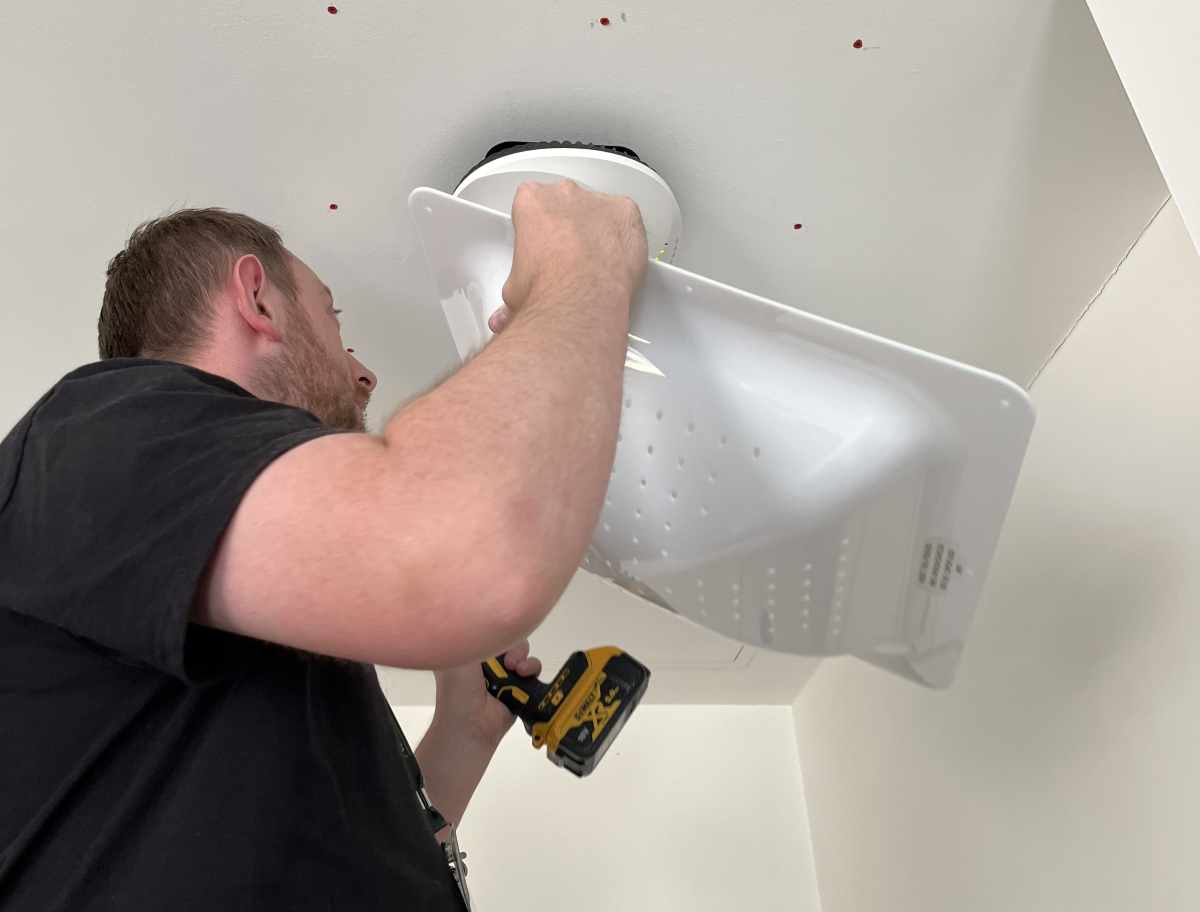
At a Glance
Choosing the right anti-ligature cover for hospitals requires assessing the installation environment, ligature risks, equipment compatibility and long-term operational requirements. A purpose-designed enclosure should reduce potential attachment points, protect Wi-Fi infrastructure from tampering, maintain wireless performance and support efficient maintenance, helping healthcare facilities create safer environments while ensuring reliable network operation.
Send us an enquiry by submitting a form or call us to discuss the right anti-ligature enclosure for your healthcare facility.
Why Hospitals Use Anti-Ligature Covers
Reliable wireless connectivity underpins many everyday hospital operations, from staff communications to connected medical systems and digital record management. As Wi-Fi access points become more widely installed throughout healthcare facilities, they also become part of the physical environment that estates and facilities teams must account for in a ligature risk assessment, from both an operational and safety perspective.
Unlike standard commercial buildings, hospitals often contain areas where fixtures and exposed equipment require additional consideration. In mental health settings, behavioural units and other higher-risk environments, reducing potential ligature points forms part of creating safer spaces for service users while ensuring essential infrastructure remains available.
This is where anti-ligature covers play an important role, as they don’t just enclose a Wi-Fi access point but also minimise opportunities for misuse while protecting the equipment from vandalism and accidental damage. The result is a solution that supports both safety objectives and the reliable operation of the hospital’s wireless network.
Understanding why these covers are used provides a foundation for choosing the right one. This is why the next step is to identify the specific risks an enclosure should address across different healthcare environments.
What Risks Should An Anti-Ligature Cover Help Address?
Every hospital presents different operational challenges, so there is no one-size-fits-all approach to protecting Wi-Fi infrastructure. However, the most effective covers made with anti-ligature design in hospitals address two key considerations, reducing environmental risks for service users and protecting valuable network equipment from damage or interference.
Reducing Ligature Risks
In areas where additional environmental safety measures are required, exposed equipment can pose unnecessary risks if not appropriately protected. An anti-ligature cover helps in reducing ligature risks in hospitals by enclosing the access point within a smooth, rounded housing that reduces potential attachment points and removes exposed components.
The enclosure also conceals the mounting hardware that might otherwise remain accessible. This allows hospitals to maintain the wireless infrastructure they rely on without introducing unnecessary environmental hazards, supporting a safer setting for service users and staff alike.
Protecting Equipment from Tampering
The hospital Wi-Fi network operates continuously, making equipment reliability just as important as physical safety. Access points installed in corridors, communal areas and other publicly accessible spaces can be vulnerable to tampering, vandalism or accidental impact, all of which can disrupt connectivity and increase maintenance costs.
A high-quality protective enclosure creates a robust barrier around the equipment, helping preserve its condition while allowing it to continue operating normally. By reducing avoidable damage, facilities and IT teams can spend less time on repairs and more time maintaining the broader network infrastructure.
While these protective benefits are essential, not every enclosure delivers the same level of performance. The materials, construction and anti-ligature design in hospitals influence how effectively they perform over the long term, making these features an important part of the selection process.
What Features Should You Look for in an Anti-Ligature Cover?
The effectiveness of anti-ligature covers depends on more than their appearance. From the materials used to its installation method, every design element contributes to how well the enclosure performs throughout its service life. Understanding these features helps estate teams and managers make informed decisions when selecting a solution for their facility.
1. Durable Construction
Healthcare environments demand equipment that can withstand constant use and routine maintenance. An enclosure manufactured from high-impact polycarbonate offers excellent durability while resisting accidental impact and everyday wear.
Long-term performance also depends on how well the enclosure retains its structural integrity over time. Selecting a robust material helps reduce replacement costs and ensures the enclosure continues protecting the access point throughout its operational life.
2. Purpose-Built Anti-Ligature Design
A protective cover should be designed specifically for environments where reducing ligature risks is a priority. Features such as smooth contours, rounded edges and tamper-resistant fixings help minimise potential attachment points while securely housing the access point.
The enclosure should also fit closely around the device, leaving no unnecessary gaps or exposed mounting hardware. These design characteristics support broader measures for anti-ligature safety in hospitals without affecting access to authorised maintenance.
3. Maintains Wireless Performance
Physical protection should never compromise network performance. An anti-ligature enclosure should allow wireless signals to pass through with minimal interference, ensuring the access point continues providing reliable coverage across the facility.
This balance between protection and performance is particularly important in hospitals, where uninterrupted connectivity supports communication systems, digital healthcare services and operational workflows.
4. Offers Practical Maintenance
Clear enclosures that are easy to install allow IT teams to quickly check equipment status without unnecessary disruption. This further simplifies routine inspections and streamlines maintenance.
Such covers with anti-ligature design in hospitals are made with maintenance in mind, helping reduce downtime and supporting efficient management of the hospital’s wireless infrastructure.
How to Match the Enclosure to Your Installation
Once you have identified the feature that matters most, the next step is choosing an enclosure that suits both the installation environment and the Wi-Fi equipment being protected. Selecting the right size and configuration helps ensure reliable performance while supporting anti-ligature safety in hospitals.
Different installations often require different enclosure designs. Standard indoor access points may only require a compact anti-ligature enclosure, while larger devices or installations in suspended ceilings and outdoor locations benefit from purpose-designed alternatives.
To support these varying requirements, Oystashell® manufactures a range of anti-ligature Wi-Fi access point enclosures. The Oystashell 1 is designed for many standard indoor access points, while the Oystashell 1D accommodates larger modern devices. For smaller access points or installations with limited space, the Oystashell 1N and Oystashell 1S provide more compact options.
Where additional environmental protection is required, the Oystashell 2 is designed for suspended-ceiling applications, while the Oystashell 3 provides water-resistant protection. This range allows healthcare facilities to match each enclosure to the site’s specific equipment and installation requirements.
Supporting Safer Hospital Infrastructure with Oystashell
Selecting anti-ligature products is an important part of creating safer healthcare environments while protecting the wireless infrastructure that supports everyday operations. By considering design, durability, wireless performance and installation requirements together, hospitals can specify an enclosure that remains effective over the long term.
Oystashell designs and manufactures anti-ligature Wi-Fi access point enclosures for healthcare, custodial, education, public and industrial environments. Every enclosure is designed to protect critical infrastructure while supporting safer installations in locations where reducing ligature risk is part of the wider environmental design strategy.
To discuss the most suitable enclosure for your project, call us, email us or complete our online contact form and our professionals will get in touch with you.