
At a Glance
Mental health facilities rely on CCTV to support safety, security and operational oversight, but poorly protected cameras can introduce unnecessary risk. This guide explains the common challenges affecting CCTV dome cameras, the factors that influence safer installation and practical ways to reduce, manage and mitigate tampering and ligature risks while maintaining effective surveillance. It also highlights how anti-ligature protective enclosures can support safer CCTV installations without compromising camera performance or operational reliability.
Submit the online contact form today to discuss the most suitable Oystashell® CCTV enclosure for your healthcare environment.
Why CCTV Dome Cameras Require Special Consideration in Mental Health Facilities
CCTV systems play an important role in supporting safer environments across mental health facilities. They help staff monitor communal areas, protect property, investigate incidents when necessary and maintain an appropriate level of security without being intrusive. However, installing surveillance equipment in environments designed for vulnerable service users requires careful planning that extends beyond camera performance alone.
Unlike many commercial settings, mental health facilities are designed around reducing avoidable hazards whenever possible. Every fixture, fitting and piece of equipment must be assessed not only for its intended function but also for its interaction with the surrounding environment and CCTV dome cameras are no exception. Their position, profile and level of protection can influence the overall safety of a space.
This is where the discussion moves beyond surveillance technology itself. Understanding CCTV camera risks in mental health facilities means considering how cameras can remain operational while reducing opportunities for accidental damage or the creation of ligature points.
Similarly, when considering the risks of CCTVs in hospital wards, it’s important to consider how surveillance equipment is installed, protected and integrated into the wider care environment. Addressing these factors early helps create installations that continue to perform reliably while supporting the building’s broader safety objectives.
Common Risks to CCTV Dome Cameras in Mental Health Environments
Every healthcare environment presents different operational challenges, yet several common risks consistently affect CCTV installations. Recognising these issues provides a foundation for making more informed decisions about camera placement and protection.
Ligature Risks Around Installed Equipment
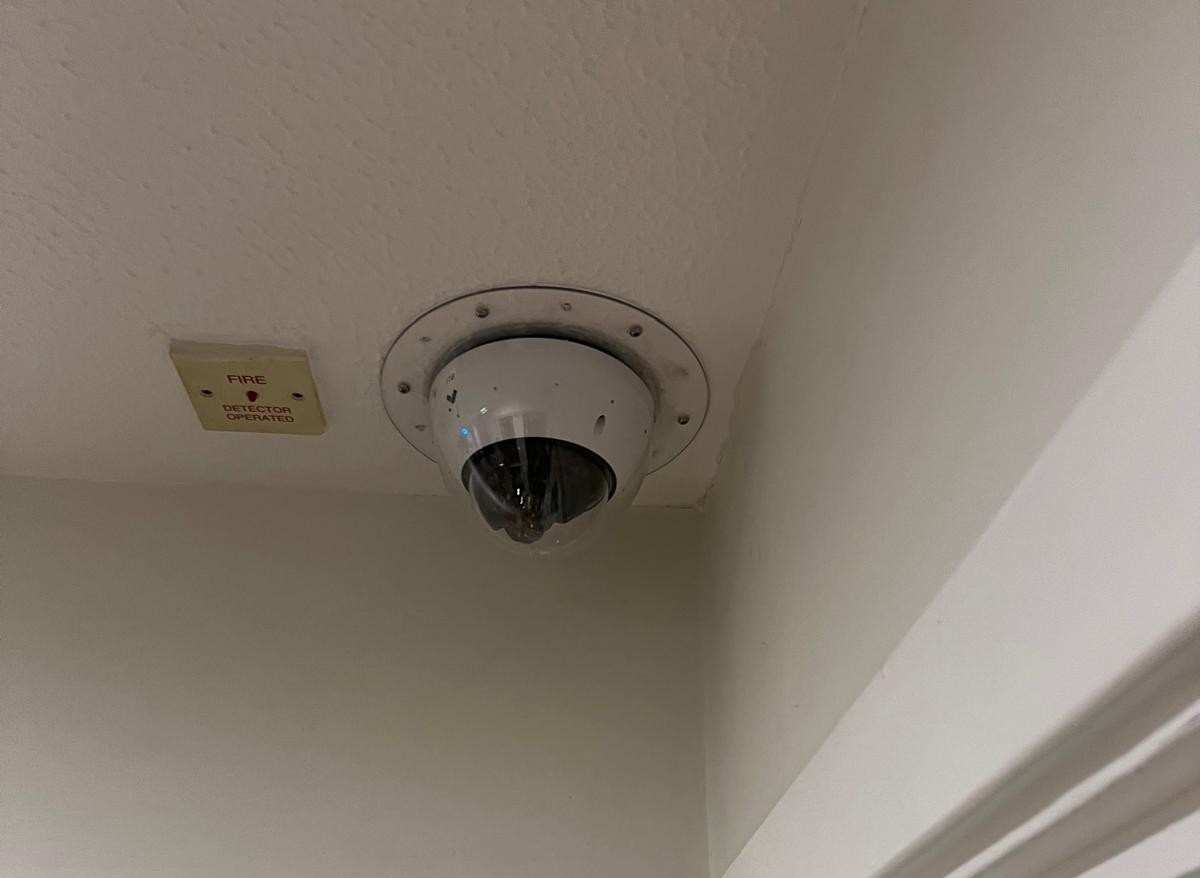
The shape and installation of a CCTV dome camera can affect its alignment with anti-ligature design principles. A camera fitted with exposed brackets, protruding edges or gaps between the housing and mounting surface may create potential ligature points.
For this reason, many facilities look beyond the camera specification itself and consider how it is installed. Protective enclosures with rounded, flush-fitting profiles help minimise potential attachment points while keeping surveillance systems fully operational. This approach helps protect CCTV dome cameras from risks without compromising the camera’s intended purpose.
Tampering and Deliberate Interference
CCTV cameras are usually installed in communal spaces and shared areas where they remain visible throughout the day. While this visibility supports effective observation, it also increases the likelihood that cameras will be touched, obstructed or deliberately interfered with.
Interference does not always result in obvious damage, as a camera that has been moved or repositioned, partially covered or loosened from its mount may continue operating while no longer providing the coverage it was intended to deliver.
If these issues go unnoticed, blind spots can develop, reducing the surveillance system’s effectiveness. For facilities teams, this creates additional inspection and maintenance requirements that could otherwise be avoided.
Considering how to protect CCTV dome cameras from unauthorised interference during the design stage helps maintain consistent surveillance and reduces unnecessary disruption to day-to-day operations.
Accidental Impact and Damage
Mental health facilities are busy environments where equipment is moved regularly to support day-to-day care and building operations. Beds, trolleys, mobile hoists, ladders and maintenance equipment may all pass through CCTV-monitored areas, increasing the likelihood of accidental contact.
Although many impacts are minor, repeated knocks can affect the condition of the camera housing or, over time, its positioning. When planning CCTV installations, it is therefore important to consider how the surrounding environment may affect the equipment throughout its service life. Identifying locations where cameras are more likely to be accidentally contacted can help inform installation decisions, reducing CCTV camera damage before issues arise.
Environmental Exposure and Operational Wear
Unlike many other building fixtures, CCTV dome cameras operate continuously, day and night. Exposure to dust, cleaning products, moisture in certain areas and general building activity can gradually affect the exterior of the housing and the camera’s visibility, even when no obvious damage has occurred.
Because these changes develop slowly, they are usually overlooked until image quality or equipment condition begins to decline. In mental health facilities, where CCTV supports safety, incident review and day-to-day operations, maintaining reliable camera performance is an important consideration throughout the equipment’s operational life.
Factors That Influence CCTV Dome Camera Safety
Understanding the risks is only one part of planning safer CCTV installation. Camera placement, surrounding equipment and the design of any protective enclosure also affect how well a surveillance system performs in a mental health facility.
Avoid relying on a single feature, as safer installations are typically achieved through a combination of thoughtful planning, appropriate equipment selection and products specifically designed for high-risk environments.
This is the principle behind Oystashell®, as we specialise in protective CCTV and Wi-Fi enclosures developed for healthcare, custodial, educational and other public environments where infrastructure must remain operational while supporting broader safety objectives. Instead of replacing surveillance equipment, Oystashell products are designed to help protect CCTV dome cameras through anti-ligature design, tamper-resistant construction and durable polycarbonate housing that integrates with existing camera installations.
These protective measures are most effective when they form part of a well-planned installation, in which camera location, enclosure design and operational requirements are considered together. Let’s take a closer look at them.
Camera Placement and Visibility
The location of a CCTV dome camera determines far more than the areas it can monitor. In mental health facilities, placement also influences whether the camera is exposed to accidental contact, is vulnerable to deliberate interference or can provide consistent coverage without creating unnecessary blind spots.
Each area within a facility presents different operational requirements. Corridors, communal spaces, entrances and observation areas all have unique movement patterns and activity levels, so camera placement should always reflect the purpose of the space rather than follow a standard layout.
Positioning cameras with both surveillance objectives and the surrounding environment in mind helps improve coverage while supporting safer, more practical installations.
Equipment Design and Surface Profile
The design of a CCTV installation extends beyond the camera specification. Mounting arrangements, enclosure profile, and how protective equipment integrates with surrounding walls or ceilings are also crucial in a high-risk environment.
In such spaces, purpose-designed protective enclosures become an important consideration, such as the Oystashell® 4. It supports anti-ligature principles while protecting surveillance equipment from tampering and operational wear. A rounded, flush-fitting profile and durable polycarbonate construction help the enclosure blend into the overall installation.
The complete range includes the standard Oystashell 4, the corner-mounted profile Oystashell® 4C, the larger Oystashell® 4L for oversized dome cameras and the Oystashell® 4360 for 360° fisheye cameras. Selecting an enclosure that matches both the equipment and its environment helps create a more considered installation.
Supporting Safer CCTV Installation with Oystashell
To protect CCTV dome cameras in mental health facilities, organisations should consider the installation as a whole, as it supports both reliable surveillance and safer environments. Considering the camera as part of the wider building design helps ensure it continues to perform its intended role without introducing avoidable safety or operational concerns.
Oystashell designs CCTV enclosures, especially for high-risk environments where surveillance equipment requires an additional level of protection. The Oystashell 4 range integrates with existing dome cameras, supports anti-ligature design principles and helps facilities maintain robust CCTV infrastructure over the long term.
If you’re reviewing health and safety within a mental health facility or specifying equipment for a new project, call, email or submit our contact form today to discuss the most appropriate enclosure for your requirements.