
At a Glance
The right CCTV protection for you depends on more than whether a camera is installed indoors or outdoors. Facilities teams should assess the installation environment, camera type, mounting arrangements and operational risks to specify an enclosure that supports reliable surveillance, simplifies maintenance and provides appropriate long-term equipment protection.
Need advice on selecting the right CCTV cover? Submit an enquiry form – our team will be happy to help.
Indoor vs Outdoor CCTV Protection – What Facilities Teams Need to Know
When you’re specifying a CCTV system for your business, you probably focus the most attention on the camera technology. But the physical protection surrounding the equipment is just as important for its long-term performance.
The right CCTV protection will help you reduce downtime and support reliable surveillance, ensuring that your cameras remain operational in demanding environments.
The level of CCTV camera protection required depends largely on where the camera is installed. An indoor camera in a healthcare setting will face different risks from one mounted on the exterior of a warehouse or public building, so you should select an enclosure with your installation environment in mind.
Understanding these differences enables your facilities teams to make informed decisions that support both operational reliability and business safety.
Why CCTV Protection Requirements Vary by Environment
CCTV installations are planned and shaped by the environment in which they operate. For instance, a camera installed inside a secure custodial facility can be subject to accidental impacts or even intentional tampering. An external CCTV installation needs to withstand changing weather conditions and airborne contamination, with an increased risk of deliberate damage.
As a result, effective protection begins with understanding the environment, not just selecting a standard enclosure for the location.
The installations themselves also influence the level of camera protection required. Factors such as building occupancy, the likelihood of physical contact, maintenance routines and environmental conditions all affect how well a camera performs in the long run.
The best way to protect surveillance equipment without compromising image quality, accessibility or ongoing maintenance is to select a CCTV camera cover or enclosure that reflects these operational challenges.
Indoor CCTV Protection Considerations
Indoor CCTV camera protection is often underestimated and you probably assume that it’ll face fewer challenges than cameras installed outdoors. But that isn’t always the case.
In occupied buildings, cameras are constantly exposed to everyday activities that can affect both their condition and performance. Busy corridors, reception areas, educational facilities, warehouses and public spaces all present opportunities for accidents, while cameras installed in a custodial or healthcare environment may also need to address additional safety considerations.
Unlike outdoor installations, indoor CCTV protection is less focused on resisting the elements and more about safeguarding equipment from physical interference. This makes your choice of enclosure an important part of the overall surveillance system. Your facilities teams should also consider factors such as camera location, accessibility, interaction with occupants and the likelihood of tampering.
Outdoor CCTV Protection Considerations
On the other hand, outdoor CCTV cameras face a broader range of environmental challenges throughout the year.
Rain, wind, dust, UV exposure and temperature fluctuations can all affect the condition of surveillance equipment over time if your cameras are left exposed. Installations on a building’s exterior, transport infrastructure, commercial premises and public spaces may also create greater risk of vandalism or deliberate damage.
Your outdoor CCTV protection should therefore provide both environmental resilience and physical security. A well-designed enclosure will help shield the camera from the elements, as well as reducing the likelihood of impact damage. You can also extend equipment life and maintain reliable surveillance under changing conditions by simply selecting protective measures appropriate for the installation environment.
Choosing CCTV Protection for Different Environments
Understanding indoor vs outdoor CCTV protection helps your facilities teams recognise that, while the risks differ, the objective remains the same, which is to protect the surveillance equipment without affecting camera performance.
Although indoor and outdoor CCTV installations present different challenges, they don’t always require separate enclosures. Instead, the most appropriate enclosure is often based on the camera type, mounting arrangement and the operational requirements of your site.
Oystashell’s CCTV enclosures meet these requirements, as this selection has been developed with that flexibility in mind and can be used for both indoor and outdoor environments. The following factors can help your facilities teams choose the most appropriate model.
1. Choose the Right CCTV Cover for the Camera
The first step is ensuring the enclosure is compatible with the camera itself. CCTV systems vary in size, shape and configuration, so you should choose an enclosure that accommodates the equipment without obstructing the camera’s field of view or compromising its intended performance.
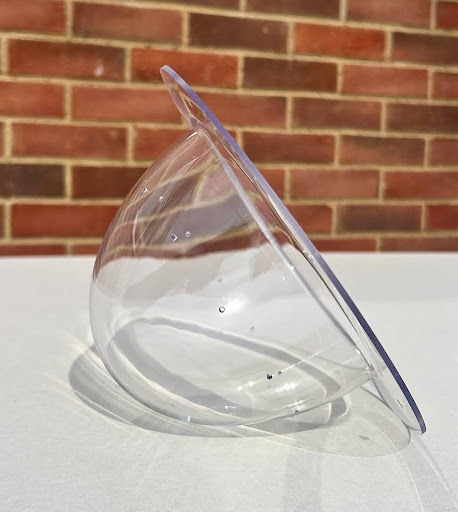
Oystashell’s CCTV range has been developed to suit different camera types. The Oystashell 4 is designed for standard dome cameras, while the Oystashell 4C offers a compact solution for corner camera installations and the Oystashell 4L accommodates larger camera models. Similarly, the Oystashell 4-360 has been developed for compatible 360-degree fisheye cameras.
Selecting an enclosure that matches the camera’s design helps you guarantee effective CCTV protection without compromising coverage or image quality.
2. Match the Enclosure to the Mounting Location
The mounting position of your cameras can influence the type of enclosure you need. Whether the camera is installed on a ceiling, on a wall, in a corner, or configured for 360-degree surveillance, the enclosure should support the installation without restricting visibility or interfering with the camera’s coverage.
Selecting a design that complements the mounting arrangement helps you make sure the surveillance system can function as intended while providing appropriate physical protection for the equipment.
3. Plan for Inspection and Routine Maintenance
Protective enclosures should allow for easy ongoing maintenance. All cameras require periodic inspection, cleaning and occasional upgrades and your maintenance teams should be able to access the equipment without unnecessary disruption.
Oystashell’s CCTV covers are transparent, made with high-impact polycarbonate, allowing maintenance teams to carry out visual inspections without obstructing the camera’s field of view. This makes routine maintenance simple and helps you to easily identify damage before it affects system performance.
4. Assess the Level of Protection Required
The level of protection your cameras need depends on the environment in which they operate. Areas with higher public access or greater potential for accidental impact or tampering may require more robust protective measures than lower-risk locations.
To support these varied needs, Oystashell’s CCTV enclosures incorporate anti-ligature profiles, robust polycarbonate construction and tamper-resistant fixings to help protect surveillance equipment in demanding environments.
Access the Right CCTV Protection with Oystashell
Your considerations for indoor vs outdoor CCTV protection will ultimately come down to selecting an enclosure that’s appropriate for the camera, its installation and the operational demands of your site. Taking all these factors into consideration during the initial phase helps your facilities teams support reliable surveillance while protecting CCTV cameras across a wide range of environments.
If you’re interested in learning more about our range of CCTV camera protectors for wireless infrastructure, call our team, send us an email or complete our online contact form to start the conversation.
One Comment