
At a Glance
CCTV cameras in schools can support incident investigation, access monitoring and deterrence, but they also create privacy, compliance and maintenance responsibilities. Their effectiveness depends on reliable recording and appropriate positioning. Physical covers can help protect vulnerable cameras against impact, vandalism and tampering, provided the enclosure matches the camera and its installation requirements.
To find the right Oystashell® CCTV cover for your school, submit an enquiry form or contact our team today.
Why Schools Use CCTV?
CCTV can help schools investigate incidents, monitor access points and support safeguarding, but cameras are only useful when they capture the right footage and remain operational.
Advantages and disadvantages of CCTV cameras in schools need to be assessed beyond camera placement and recording quality. Privacy, maintenance, physical damage and equipment compatibility all affect how well a system performs over time.
Protecting the cameras themselves is part of that assessment. A camera that has been knocked out of position, damaged or tampered with may leave a gap in surveillance when the footage is needed most.
What Are the Advantages of CCTV Cameras in Schools?
CCTV can support school security by monitoring entrances, exits, corridors, car parks and other areas where there is a clear operational need.
Key benefits include:
- Incident investigation: Recorded footage can help authorised staff establish what happened during an incident, subject to access controls and retention policies.
- Access monitoring: Cameras can help staff review activity around entrances and restricted areas.
- Deterrence: Visible CCTV cameras may discourage some unauthorised access or other misconduct.
- Operational oversight: Footage can help schools review security procedures and identify recurring issues around particular areas.
However, CCTV does not prevent every incident or replace appropriate supervision, safeguarding procedures and access controls. Its effectiveness depends on camera positioning, image quality, reliable recording and a clear purpose for surveillance.
What Are the Disadvantages of CCTV in Schools?
The debate over the advantages and disadvantages of CCTV cameras in schools involves balancing immediate physical security against long-term legal compliance. It also covers hardware durability in high-traffic areas, costs, administrative workload and the effect of continuous monitoring on an open learning environment.
Disadvantages include:
- Privacy concerns: CCTV footage that identifies individuals is personal data. Schools must strictly restrict access to authorised people only.
- Data protection duties: Schools need a lawful basis for monitoring. They need to review retention periods and avoid collecting more footage than necessary.
- Compliance requirements: Schools must follow data protection law and the Department for Education’s guidance, including transparency, impact assessment and secure footage management.
- High initial costs: The initial purchase of CCTV cameras is only part of the cost. Schools must account for installation, recording systems, software updates, hardware protection, inspections and eventual upgrades.
- Ongoing costs: Cameras in exposed or accessible locations may need additional physical protection if they are vulnerable to interference. These may increase maintenance, repair and replacement costs.
- False security: A visible camera does not guarantee a usable recording. Poor positioning, obstruction or recording faults can compromise coverage. Schools should check that cameras remain correctly aligned and that recorded footage can be retrieved when required.
Myth vs. Fact About What CCTV Can and Cannot Do
| Myth | Fact |
| A weather-resistant camera is protected from vandalism. | Weather resistance and impact resistance address different risks |
| Installing a protective cover solves every security concern. | The cover must suit the camera, location and potential risks. |
| CCTV footage can be kept indefinitely in case it becomes useful. | Retention should be limited to what the school’s purpose requires. |
The lesson is to assess the whole installation, including the camera, mounting, protective enclosure, recording system and policies governing footage.
When Does a CCTV Camera Need Additional Physical Protection?
Signs that a camera installation needs reviewing include:
- Repeated changes to the camera’s angle or position
- Cracked housing, loose fixings or visible damage from a collision
- Cameras installed within easy reach of pupils or visitors
- Recording gaps that coincide with physical damage or interference
- A mounting arrangement that creates additional ligature concerns in a higher-risk environment
A retrofit CCTV camera cover can help when the school needs to safeguard equipment without replacing the entire surveillance setup.
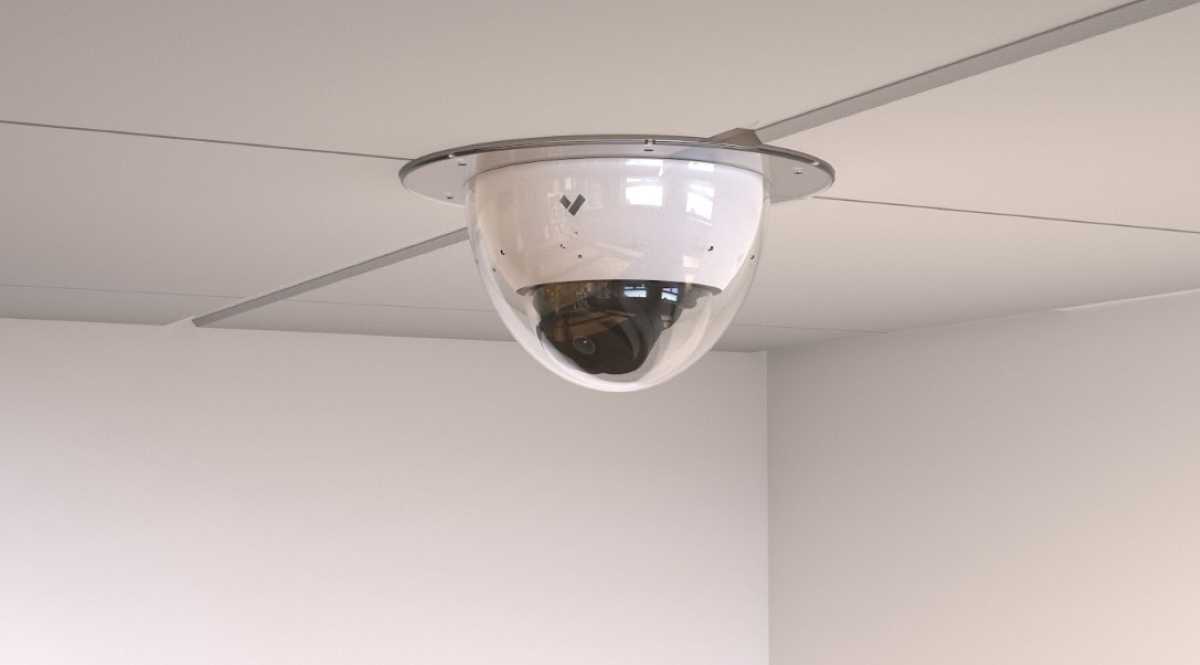
Specialised solutions like Oystashell® camera covers offer a practical option for these vulnerable environments. Manufactured from tough polycarbonate, an Oystashell enclosure provides a durable physical barrier against accidental strikes while maintaining clear camera visibility.
The smooth profiles help address ligature considerations in relevant environments. However, no enclosure removes every ligature risk or replaces a site-specific assessment and other necessary safeguards.
How to Protect the Hardware Itself
Protecting CCTV hardware requires physical shielding, secure mounting and tamper-resistant fixing to safeguard vulnerable cameras.
Oystashell CCTV covers are made from 3 mm riot-shield-grade polycarbonate to protect cameras against impact and vandalism while maintaining visibility. The range includes different configurations for different camera types and mounting positions. The Oystashell® 4 supports compatible dome cameras up to 140 mm in diameter, while the Oystashell® 4C has a corner-mounted profile measuring 255 x 255 x 148 mm, suited to corner installations between two walls.
The Oystashell® 4L accommodates compatible Verkada CD53 and CD63 dome cameras, while the Oystashell® 4360 is designed specifically for the Verkada CF83-E 360° fisheye camera, with a design intended to preserve its 360° field of view. Both models include 2 mm microphone holes for compatible camera functions.
To ensure maximum security, all models require an optional anti-tamper screw kit, which can be purchased with a quote. Verify the full dimensions, camera compatibility and installation requirements before specifying a model.
How Can You Protect Outdoor CCTV Cameras? Do They Need Additional Considerations?
Outdoor cameras face rain, moisture, temperature changes, dust and potential physical interference. The right protection depends on the camera’s IP rating (such as IP66 or IP67) and the conditions at the installation site. When deciding how to protect outdoor CCTV cameras, start with the manufacturer’s installation guidance. Check the camera’s ingress protection rating, temperature limits, mounting requirements and any restrictions on additional housings.
Similarly, don’t assume that a CCTV camera cover is suitable for outdoor use just because the camera looks enclosed. Confirm that the complete assembly is suitable for outdoor use, including its seals, cable entries, mounting points and ventilation requirements. If a camera is accessible from the ground, positioned in a busy walkway or exposed to accidental knocks, assess those risks separately.
For example, consider a typical school-mounted camera on an external wall overlooking an open playground or sports yard. While outdoor cameras are built to handle weather, their low mounting height leaves them exposed to stray footballs, equipment bags, daily interference and at times deliberate tampering.
In these outdoor locations, protective enclosures like the Oystashell 4, designed for standard dome cameras up to 140 mm in diameter and the Oystashell 4360, tailored for panoramic 360° units, provide a reliable dual solution. Built from shatterproof, riot-shield-grade polycarbonate, Oystashell covers shield outdoor hardware from environmental wear, moisture and physical impact. Their smooth, low-profile design fits seamlessly over existing camera bases and built-in anti-ligature safety contours let the school secure exposed equipment without costly electrical rewiring or full hardware replacements.
Note: Do not select these models for an exposed outdoor CCTV installation without confirming the proposed configuration is suitable.
Common Specification Mistakes to Avoid
Before purchasing a protective enclosure, avoid these mistakes:
- Matching dimensions alone: Confirm the camera model and its mounting arrangement, not just its diameter.
- Assuming every cover is waterproof: Verify the stated use and environmental suitability of the complete assembly.
- Overlooking camera functions: Ensure that the enclosure will not obstruct the lens, field of view or required microphone openings.
- Forgetting fixings: Confirm whether anti-tamper screws or other installation components are supplied separately.
- Ignoring maintenance access: Plan how authorised staff will inspect, clean and service the camera.
- Treating anti-ligature design as a complete solution: Assess the enclosure, mounting points and surrounding installation as part of the wider risk review.
A Practical Decision Guide for School Estates Teams
| Action Step | Key Focus/Checklist Task | Why It Matters |
| Audit High-Risk Locations | Identify cameras mounted within easy reach, such as in sports halls and high-traffic corridors. | Pinpoints hardware most vulnerable to physical hits or accidental damage. |
| Distinguish Threat Types | Separate weather exposure, such as rain, moisture and dust, from mechanical threats such as being struck by sports equipment or bumped into. | Choose impact-resistant protection, not just weatherproofing. |
| Verify Compatibility | Match exact housing dimensions, lens field of view and mounting bases. For example, matching standard dome units up to 140 mm in diameter with the Oystashell 4. | Prevents sizing errors, optical obstruction or audio blocking. |
| Include Required Accessories | Request anti-tamper security screw kits alongside initial product quotes. | Helps ensure a secure installation because anti-tamper fixings are supplied separately. |
Choose the Right CCTV Protection for Your School
Understanding the advantages and disadvantages of CCTV cameras in schools can help school estates teams make informed decisions about surveillance and hardware protection. The right CCTV cover depends on the camera model, mounting position and required level of physical protection. If you need a retrofit CCTV camera cover for existing equipment, check compatibility and installation requirements before specifying a model.
Explore Oystashell® CCTV covers to review the available options. To find a compatible enclosure for your camera, submit an enquiry form or contact the Oystashell® team before ordering.