
At a Glance
Dust and dirt can affect the reliability, lifespan, visibility and maintenance requirements of wireless access points and CCTV cameras. While contamination rarely disrupts wireless signals, it can contribute to heat buildup, increased service needs and reduced monitoring effectiveness. Routine maintenance, appropriate equipment placement and purpose-designed protective enclosures can help support the long-term performance of the network and security infrastructure.
Want to explore this further? Call, email or submit our online contact form to discuss protective solutions for your network and security infrastructure.
Why Dust and Dirt Are Overlooked Infrastructure Risks
Wireless access points and CCTV cameras are installed in places that receive little day-to-day attention. Mounted on ceilings, tucked above suspended ceiling grids or positioned in busy operational environments, they can remain in service for years without visible signs of deterioration. Despite this, dust and dirt gradually accumulate around networking and security equipment, creating conditions that can affect reliability and long-term performance.
Understanding how dirty wireless access points and CCTV cameras can affect their performance is particularly important in healthcare facilities, educational settings, custodial environments, public buildings and industrial sites, where uninterrupted connectivity supports daily operations.
While dust on CCTV cameras or APs (access points) rarely blocks wireless signals or affects camera operation, it can contribute to a range of issues affecting the equipment responsible for delivering these services. The extent of these effects often depends on how and where dust accumulates within the operating environment.
How Wireless APs and CCTV Equipment Collect Dust Over Time
Dust is constantly present in most indoor and outdoor environments. Air movement from ventilation systems, open doors, foot traffic and daily activities continuously circulates fine particles throughout a building.
Over time, particles settle on exposed surfaces, including wireless access points and CCTV cameras. These ceiling-mounted devices are especially vulnerable because dust usually accumulates in the voids around them, where ventilation systems, cabling and other building services are located.
In warehouses, manufacturing facilities, transport hubs and similar areas, airborne particles are generated by equipment or operational processes, increasing the rate of buildup. Even in hospitals and educational environments that follow strict cleaning procedures, dust can still collect around networking infrastructure and security equipment, as these are installed in locations that are not routinely cleaned.
How Dust and Dirt Can Affect Network and Security Equipment
A Wi-Fi signal affected by dust is rare, as most issues arise from accumulated debris that creates operational and maintenance challenges, resulting in how access points perform over the long run. Therefore, protecting WAP from dust becomes crucial. Similarly, protecting CCTV from dust is essential, as the buildup of dirt and airborne particles can obscure lenses, increase maintenance requirements and contribute to premature equipment deterioration.
Below are a few effects of dust on Wi-Fi access points and CCTVs. Knowing them helps organisations make more informed decisions about infrastructure management and protection.
1. Restricted Airflow and Heat Buildup
Wireless access points rely on effective heat dissipation to operate within their intended temperature range. When dust settles around the vents and external surfaces, airflow can become less efficient, particularly in areas where equipment is already exposed to warmer conditions.
At the same time, CCTV cameras, whether installed in enclosed housing or exposed to direct sunlight, can experience increased internal temperatures when dust builds up around the standard protective casing.
A dirty wireless access point or CCTV camera may continue functioning normally, but prolonged heat buildup can place additional strain on internal components. It can affect performance and reliability as well as become significant where connectivity and surveillance are required around the clock.
2. Reduced Hardware Lifespan
Electronic equipment performs best when they operate in stable environmental conditions. Dust accumulation can contribute to gradual wear by creating less favourable conditions around sensitive hardware.
For CCTV systems, dust can also settle on lenses and internal components, potentially degrading image clarity. As time goes on, this can also contribute to reduced effectiveness.
Rather than causing sudden failure, the effect is seen through increased replacement requirements and for organisations managing large estates, such a reduction in equipment lifespan can have wider operational implications.
3. Increased Maintenance Requirements
Dust on Wi-Fi access points and other infrastructure creates additional maintenance demands, putting pressure on facilities and IT teams, which is why facilities teams need to schedule more frequent inspections. Cleaning wireless access points can become part of routine maintenance programmes.
The same applies to CCTV systems, as contamination builds up, equipment may require additional checks to ensure devices remain in good condition and continue operating as intended.
Protecting CCTV from dust and regularly cleaning wireless access points through maintenance reduce exposure and minimise workload while supporting the long-term condition of their security and network infrastructure.
4. Reduced Visibility and Equipment Monitoring
Unlike wireless access points, CCTV cameras depend on a clear field of view to function effectively.
Dust on CCTV cameras, cleaning residue and environmental contaminants can accumulate on camera housings and protective domes, potentially affecting image clarity and making it more difficult to monitor activity effectively. This is one reason CCTV camera dust protection is given great importance, especially in public buildings and higher-risk environments.
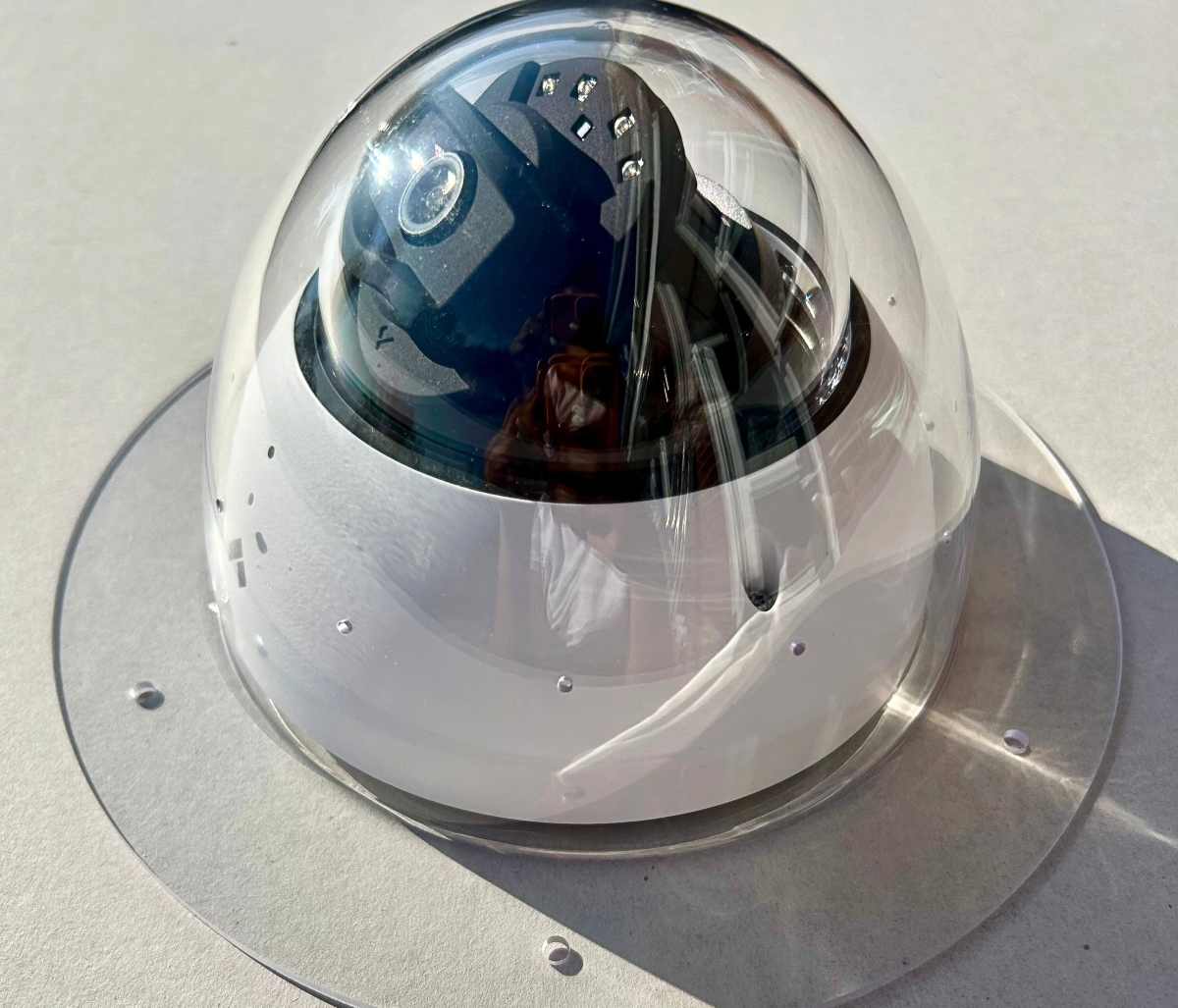
Purpose-built protective solutions, such as Oystashell 4, Oystashell 4C, Oystashell 4L and Oystashell 4360, are designed for different camera models. Their anti-tamper features help shield equipment while maintaining clear visibility for monitoring purposes.
3 Ways To Reduce Dust Around Network and Security Infrastructure
Dust cannot be eliminated, but several practical measures can help reduce its impact.
1. Include Network and Security Devices in Routine Maintenance Schedules
Wireless access points and CCTV cameras should be considered alongside other critical building infrastructure during routine inspections. Regular assessments allow facilities teams to identify contamination before it develops into a larger maintenance issue.
A planned approach also helps ensure cleaning activities are carried out consistently across the estate and not only when problems become apparent.
2. Consider Equipment Placement During Installation
The environment surrounding a device influences how quickly dust accumulates. Areas close to loading bays, production processes, ventilation outlets or high-traffic zones may expose equipment to greater levels of airborne debris.
Considering these factors during installation can help reduce future maintenance requirements while maintaining the required visibility.
3. Keep Ceiling Voids and Service Areas Clean
Ceiling voids are a common source of hidden dust accumulation. Access points installed above suspended ceilings and CCTV equipment located in service corridors, plant rooms or other restricted-access areas may be exposed to environmental conditions that differ significantly from those found in occupied areas.
Oystashell provides specialised protective enclosures for both wireless and surveillance hardware. For example, the Oystashell 2 is expertly designed to house Wi-Fi APs in suspended ceiling grids, enabling the wireless signal to pass through cleanly to deliver coverage below. In a similar manner, the Oystashell 4 shields CCTV cameras located in service areas, providing dependable protection without obstructing the visual field.
When Do Specialised Protective Covers Make Sense?
Protecting WAP from dust and reducing dust on CCTV cameras are the major considerations. However, some locations also expose infrastructure to moisture, accidental impacts and tampering, while requiring demanding cleaning procedures that can affect equipment condition over time.
In such cases, standard covers protecting CCTV from dust and Wi-Fi APs may offer basic protection, but they can also introduce additional complexities. This is because poorly designed enclosures can restrict airflow, trap heat, create condensation issues, aren’t water-resistant and pose maintenance challenges in environments with strict operational or hygiene requirements.
At Oystashell, our protective covers have been designed with various environments in mind, providing a more balanced solution.
Like the Oystashell 1D, it is a perfect option for indoor needs as it accommodates larger access points while maintaining appropriate airflow.
Water-resistant models, including Oystashell 1DW and Oystashell 1NW, are suited to environments where moisture and contamination are more likely to be present. Oystashell 3 and Oystashell 3D allow indoor wireless access points to be deployed externally, protecting them from weather, debris and environmental exposure while maintaining wireless performance.
For facilities teams focused on protecting CCTV from dust and everyday environmental conditions, Oystashell offers dedicated CCTV camera covers, such as the Oystashell 4, Oystashell 4C, Oystashell 4L and Oystashell 4360, as part of a broader infrastructure protection strategy.
Find the Right Protection for Your Environment with Oystashell
Protecting the network and security infrastructure involves more than maintaining connectivity or camera coverage. Environmental conditions, equipment location, maintenance requirements and safety considerations all play a role in long-term reliability.
Oystashell offers protective solutions for wireless access points and CCTV cameras for various facilities and sites. The range includes indoor enclosures, waterproof models, suspended cleaning solutions, outdoor enclosures and CCTV covers designed to support safer, more durable infrastructure installations, with anti-ligature design for higher-risk environments.
For further information about the Oystashell range or to discuss a specific application, call, email or submit our online contact form today.