
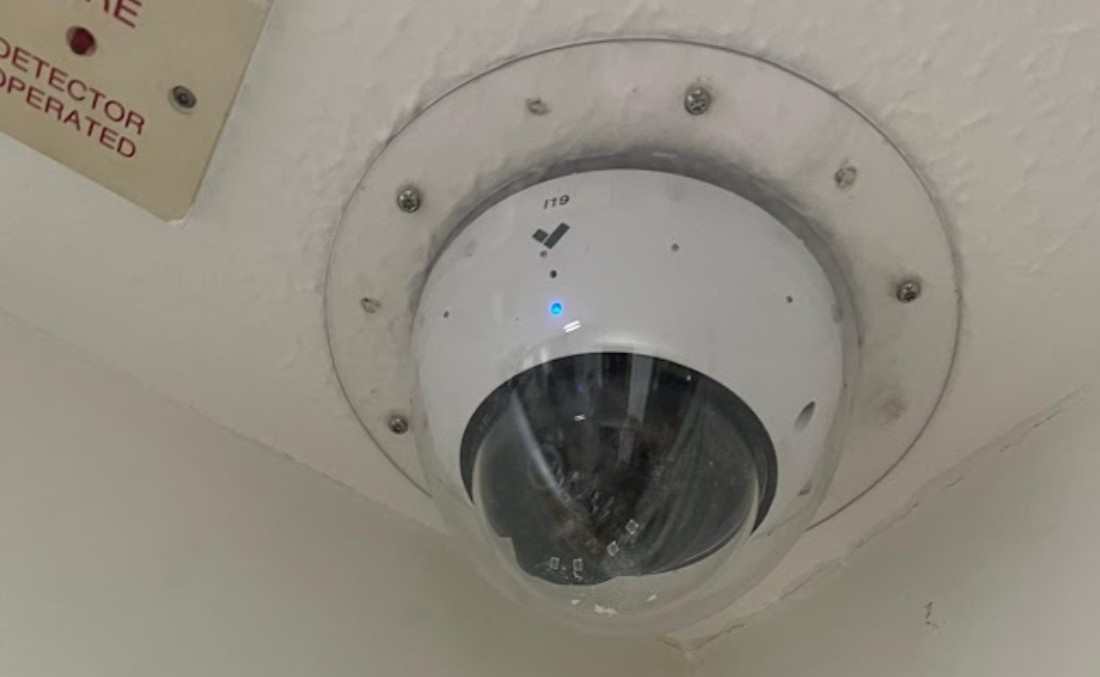
At a Glance
CCTV downtime can result from impact, tampering, environmental exposure and installation issues. Protective enclosures made from riot-shield grade polycarbonate can help reduce physical damage while maintaining camera visibility. Anti-tamper and anti-ligature considerations are also important in high-risk settings and enclosure selection depends on the camera, mounting position, and environment.
Call us or send us an enquiry to discuss the most suitable CCTV protection for your environment.
Questions This Article Answers
- Why do CCTV cameras stop working in high-risk facilities?
- How can protective enclosure help reduce CCTV camera damage?
- How do anti-tamper fixings help keep CCTV equipment operational?
- How should facilities approach CCTV camera maintenance?
- How do you choose the right Oystashell® CCTV enclosure?
What Causes CCTV Camera Downtime in High-Risk Facilities?
CCTV cameras can experience downtime because of physical impact, tampering, environmental exposure or problems affecting the wider installation. Protective measures need to address more than the camera itself.
In high-risk facilities, CCTV cameras are often installed in accessible areas where they can be exposed to accidental impact, deliberate interference and environmental conditions. Keeping them safe is crucial because damage or displacement can affect surveillance coverage, so understanding why CCTV cameras stop working requires more than simply looking at the camera.
Installation conditions and the level of physical protection are the two major factors that can cause damage and downtime. Most of the time, damage affects more than the camera housing. It can alter the camera’s position, damage its mounting or affect other parts of the installation, creating maintenance issues even when the camera has not completely failed.
Weather exposure can also create additional concerns for external installations. When facilities teams assess how to protect CCTV cameras from weather, they need to address whether the enclosure provides the environmental protection required for its intended location.
In these conditions, Oystashell® CCTV enclosures help by addressing the physical protection needs of surveillance equipment, with different enclosure models suited to specific camera configurations and installation needs.
What an Enclosure Can and Can’t Prevent In Terms Of CCTV Protection?
A protective enclosure can address some physical causes of CCTV damage, but it cannot prevent every issue that may cause downtime. It helps to distinguish between risks an enclosure can reduce and those that require separate maintenance or technical measures:
| An enclosure can help protect against | An enclosure cannot prevent |
| Physical impact to the camera | Internal camera or electrical faults |
| Tampering with the camera | Network or connectivity problems |
| Damage caused by accidental contact | Power failures |
| Physical interference with the camera or its position | Software or configuration issues |
| Some environmental factors where the enclosure is designed for the installation | Maintenance issues elsewhere in the CCTV system |
This distinction is important when considering how to stop CCTV camera damage. A protective enclosure addresses physical risks around the camera, while routine maintenance and proper installation are still needed to manage other potential causes of downtime.
Key Takeaway: Protecting the camera alone is not enough and the enclosure, fixings, mounting position and installation environments all affect the risk of damage and downtime.
How Riot-Shield Grade Polycarbonate Prevents Impact and Tamper Damage
A high-impact enclosure creates a physical barrier around the camera while maintaining visibility, helping protect surveillance equipment from physical damage and interference.
The material used for a protective enclosure plays an important role in shielding equipment from physical impact. Polycarbonate is used for this purpose because it combines impact resistance with transparency, keeping the camera visible through the enclosure.
For CCTV installations, the polycarbonate enclosure must also be compatible with the camera being protected. The Oystashell CCTV covers are manufactured from 3mm riot-shield grade polycarbonate and provide a protective barrier around compatible surveillance equipment.
The range supports specific camera configurations, including Oystashell® 4 for standard dome cameras, Oystashell® 4C for corner-mounted cameras, Oystashell® 4360 for the Verkada CF83-E fisheye camera and Oystashell® 4L for larger-format dome cameras such as the Verkada CD53 and CD63. This compatibility matters because an enclosure must protect the camera without interfering with your intended field of view or installation requirements.
Key Takeaway: The right protective material and a compatible enclosure design can help reduce physical damage without obstructing the camera’s visibility.
Anti-Tamper Fixings That Keep Cameras Operational, Not Just Protected
Anti-tamper fixings help restrict unauthorised access to the enclosure while still allowing authorised personnel to carry out maintenance when required.
This matters where CCTV equipment is installed within reach or in environments where interference with security infrastructure is a known risk, such as mental healthcare facilities or custodial settings.
Oystashell CCTV protective enclosures are installed with an anti-tamper screw kit, which is required for installation and forms part of the enclosure’s security.
The purpose is not simply to make the enclosure harder to access. It helps protect the camera and its enclosure from unnecessary interference while still allowing authorised maintenance when required.
Reducing Ligature and Safety Risks Around CCTV in Mental Health Settings
CCTV protection in mental health environments must consider both equipment security and the enclosure’s physical characteristics. Metal enclosures can seem strong but introduce accessible edges, gaps or fixing points that increase ligature risk, especially when equipment is installed within reach in such surroundings.
On the other hand, high-impact polycarbonate allows protective covers to use smooth, rounded profiles that can reduce potential attachment points. This is relevant when evaluating how to stop CCTV camera damage without adding features that could create safety concerns in the environment.
Oystashell uses this approach across the protective covers, combining physical protection with anti-ligature considerations. However, anti-ligature enclosures should not be treated as completely ligature-free or as a replacement for risk assessment and other safety measures.
Key Takeaway: In high-risk settings, CCTV protection must balance physical security with the installation’s wider safety requirements.
Where Downtime Costs the Most in Hospitals, Correctional Facilities and Public Buildings
CCTV downtime can have greater operational consequences in environments where surveillance supports wider safety, security and monitoring requirements.
In healthcare and mental health environments, system failure can affect monitoring, while custodial facilities may require continuous visibility across controlled areas. The causes can range from physical damage and interference to environmental exposure or faults within the wider installation.
Public buildings, schools, transport facilities and other high-traffic environments can expose cameras to accidental contact or interference, making the installation location an important consideration when deciding how to stop CCTV camera damage. This is why routine inspection remains necessary after installation.
A CCTV camera maintenance checklist can cover camera alignment, image quality, visible damage, enclosure conditions, fixings and signs of environmental exposure.
CCTV Camera Maintenance Checklist
Use routine inspection to check:
- Camera alignment and positioning
- Image quality and visibility
- Visible damage to the camera or enclosure
- Conditions of the protective enclosure
- Anti-tamper fixings and signs of interference
- Mounting points and surrounding installation
- Signs of environmental exposure
- Any changes that could affect camera coverage
This type of inspection doesn’t replace planned maintenance or technical servicing. It provides a simple way to identify physical issues that could affect CCTV performance.
Key Takeaway: Protective enclosures can reduce physical risks, but regular inspection remains important for identifying damage, interference, and installation issues early.
Choose the Right Oystashell CCTV Enclosure for Continuous Uptime
The right Oystashell enclosure depends on the camera configuration, mounting position and installation environment, so confirm compatibility before selecting a cover. Oystashell provides CCTV enclosures for different camera types, with options for standard dome, corner-mounted, larger-format dome and 360° fisheye cameras.
Before choosing a CCTV protective enclosure, consider the following:
- Camera type: Is it a standard dome, corner-mounted, fisheye or larger-format dome camera?
- Mounting position: Where is the camera installed and can people reach it?
- Environment: Is the camera installed indoors or exposed to external conditions?
- Protection requirements: Is the main concern impact, tampering, ligature consideration or a combination of risks?
These factors can help narrow down the appropriate enclosure for this installation. Not every enclosure is intended for every installation condition, so model selection is an important part of the process.
For further assistance, you can also call us, email us with your questions or submit the contact form with your camera model and installation details today.